Beaches
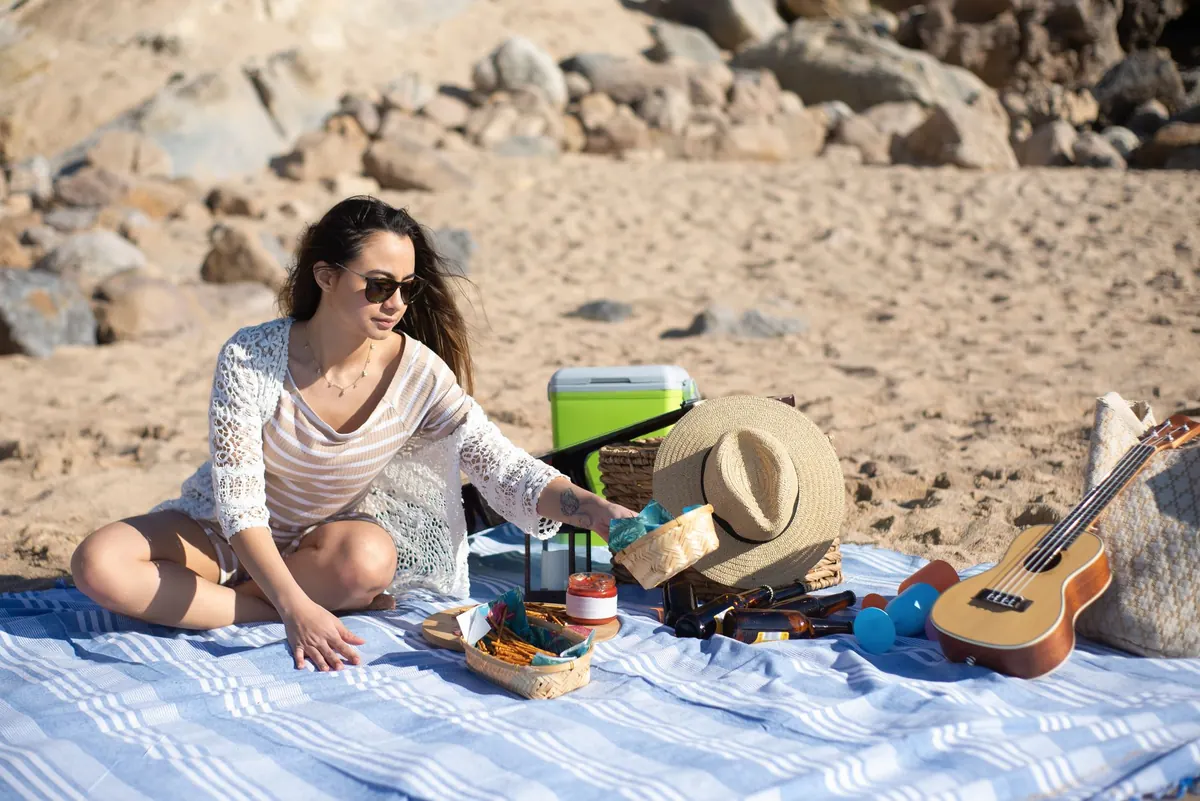
How to Choose a UK Beach for a Wind-Free Picnic: A Tide and Wind Guide
A picnic on a windy beach is a test of patience. The sandwiches survive; it is the napkins, the crisp packets and the paper plates that let you down. By the time you have wrestled the blanket back under the cool box for the third time, nobody is in the mood for a swim.
Calm beaches are rarely a matter of luck, though. Wind direction, tide state and the shape of the shoreline decide almost everything, and all three can be checked in advance from your kitchen table. Ten minutes with a forecast and a tide table will put you in a sheltered spot while everyone else is huddled behind their car.
Start With the Wind, Not the Beach
Most people choose a beach first and then hope for the best. Turn that around. Look at the wind before you look at the map, because the forecast will rule out half the coastline straight away.
Use two sources rather than one — the Met Office coastal forecast alongside Windy, XCWeather or Windfinder is a good combination. Read the hour you will actually be there, not the day’s headline summary, and read three numbers: average speed, direction, and gusts. The gust figure is the one people ignore and the one that ruins picnics. A steady 8 mph is pleasant; 8 mph with 22 mph gusts is a losing battle with a plate of quiche.
As a rough guide, an open beach feels calm below about 10 mph, starts rearranging your lunch between 12 and 18 mph, and becomes genuinely unpleasant above 20 mph. Sheltered coves shift those numbers upwards by a fair margin, which is the whole point of choosing carefully.
Also watch for the sea breeze. On a warm, still morning the land heats faster than the sea, and by early afternoon a fresh onshore breeze can appear from nowhere. A late-afternoon picnic on an exposed beach in July can be windier than the morning forecast ever suggested. Eat early or find shelter.
Direction Matters More Than Speed
Once you know the wind direction, work out which way your candidate beaches face. A map or a coastal road atlas will tell you: a beach facing south is exposed to anything from the south, while a north-facing cove on the same stretch of coast is in the lee.
There are three situations, and they behave differently:
- Onshore wind — blowing from the sea onto the beach. This is the worst case. You get the full fetch of the water, blown sand at eye level and nowhere to hide except behind a wall. Onshore winds also mean bigger waves and a wetter picnic.
- Offshore wind — blowing from the land out to sea. The sea is flat and the beach itself still catches the wind, but you can usually tuck in behind dunes, cliffs or a hedge with the wind-shadow on your side. Deceptively good.
- Cross-shore wind — blowing along the beach. Often the best compromise. The sea stays manageable and a headland, groyne or harbour wall at one end gives real shelter.
As a broad rule, a south-westerly hammers the south coast of Cornwall and Devon head-on but blows offshore on the north coast of the same peninsula. A northerly rattles the North Norfolk coast while the south-facing bays further along the Channel sit calmer. Find the stretch where the wind is offshore or cross-shore, then pick your beach within it.
How to Read a Tide Table in a Minute
Tide tables look technical and are not. You need two things from them: the time of high water and the range — the gap between high and low.
There are normally two high waters and two low waters in a day, roughly 12 hours 25 minutes apart, so the tide is always drifting later. Ranges are biggest around new and full moon (spring tides) and smallest around the quarter moons (neaps). A big spring range means the beach changes shape dramatically between morning and afternoon.
For picnic purposes, ask one question: how much beach will there be at the back, at the time I arrive? Steep pebble beaches can vanish almost entirely at high water on a spring tide, leaving you nowhere to sit. Wide flat sandy bays barely change. If you want to sit under the cliffs at low water on a spring tide, accept that you will be moving within a couple of hours as the sea pushes you back — and never let a rising tide get between you and your exit path.
The tide rises and falls fastest around mid-tide and slows near high and low water, so slack water is your friend. On the day itself, look at the strandline and the dark, wet sand: that is where the last high tide reached, and it tells you exactly how much room you have.
Where Shelter Actually Lives
Wind curls around headlands and funnels down valleys, so shelter is often closer than it looks. The further into the lee of an obstacle you sit, the calmer it gets — the first few metres behind a wall are still turbulent.
Reliable options, roughly in order of effectiveness:
- Behind a headland or a harbour wall on the windward side
- Below cliffs or a raised beach platform, with the wind coming over the top
- The seaward side of a dune system, in an offshore wind
- A wooded valley mouth or a sheltered estuary shore
- Behind beach huts, boat sheds or a solid sea wall
- Rock outcrops and large boulders, which break the flow at ground level
Do not dig into dunes or pull up marram grass to make a windbreak. Dune systems are fragile, often protected, and take years to recover.
Pick the Beach in Six Steps
- Note wind direction, average speed and gust speed for the two hours you plan to be on the sand.
- Identify which stretch of coast the wind will be blowing across or offshore for.
- Within that stretch, look for a cove, bay or estuary with high ground on the windward side.
- Check the tide table for the nearest standard port and confirm there will still be dry sand at the back of the beach.
- Check access — car parks, steps, and whether the path down floods at high water. Read local notices rather than guessing.
- Name a Plan B a short drive away, ideally one facing a different direction.
The Wind-Resistant Picnic Kit
Even a well-chosen spot has a breeze. Keep everything low and heavy: a cool box doubles as a table and a windbreak, a flask beats loose cups, and screw-top bottles survive knocks. Leave crisp packets and paper napkins in the car — they are the first things to go airborne. A weighted blanket with a couple of bags at the corners works far better than a thin one.
A windbreak is worth carrying, but use it as a screen rather than a fortress. Anchor it properly with sand or pegs, never dig sand from dunes, and avoid blocking a path or boxing yourself in completely on a warm day. Take everything home with you, including the bits the wind tried to remove.
Five Minutes Before You Leave
Check the wind for your arrival hour, note the high water time, glance at the coastline on a map and decide which way your beach faces. If the wind is onshore there, choose differently. If it is offshore or across, find the headland, wall or dune line that will sit between you and it.
Then commit to one back-up beach and go. Half the pleasure of a coastal picnic is the calm that comes from knowing you have already thought about the two things that would have spoiled it.
Photo: Kampus Production / Pexels
Related Articles